
Why FSDU displays are transforming
Irish retail (and how to get them right)
Here’s an uncomfortable retail truth: your beautifully packaged product could be brilliant, but if it’s lost among fifty competitors on an overcrowded shelf, nobody’s buying it. Shelf space is expensive, fiercely contested, and increasingly difficult to secure. Even when you’ve got it, you’re competing for attention with every other brand shouting for the same consumer eyeballs.
Enter the FSDU display – the retail game-changer that’s revolutionising how Irish brands secure premium visibility. These free standing display units create self-contained retail presence without fighting for existing shelf space. They’re the retail equivalent of bringing your own stage to the performance, rather than hoping for a spot in the lineup.
At McGowans Print, FSDU displays have become a cornerstone of our business, and with good reason. We’ve invested heavily in flatbed technology, finishing equipment, and most importantly, a team of four dedicated cardboard engineers who create bespoke units that are both visually striking and practically brilliant. This guide explores why FSDU displays work, what makes them effective, and how Irish brands can leverage them for maximum retail impact.
What exactly is an FSDU?
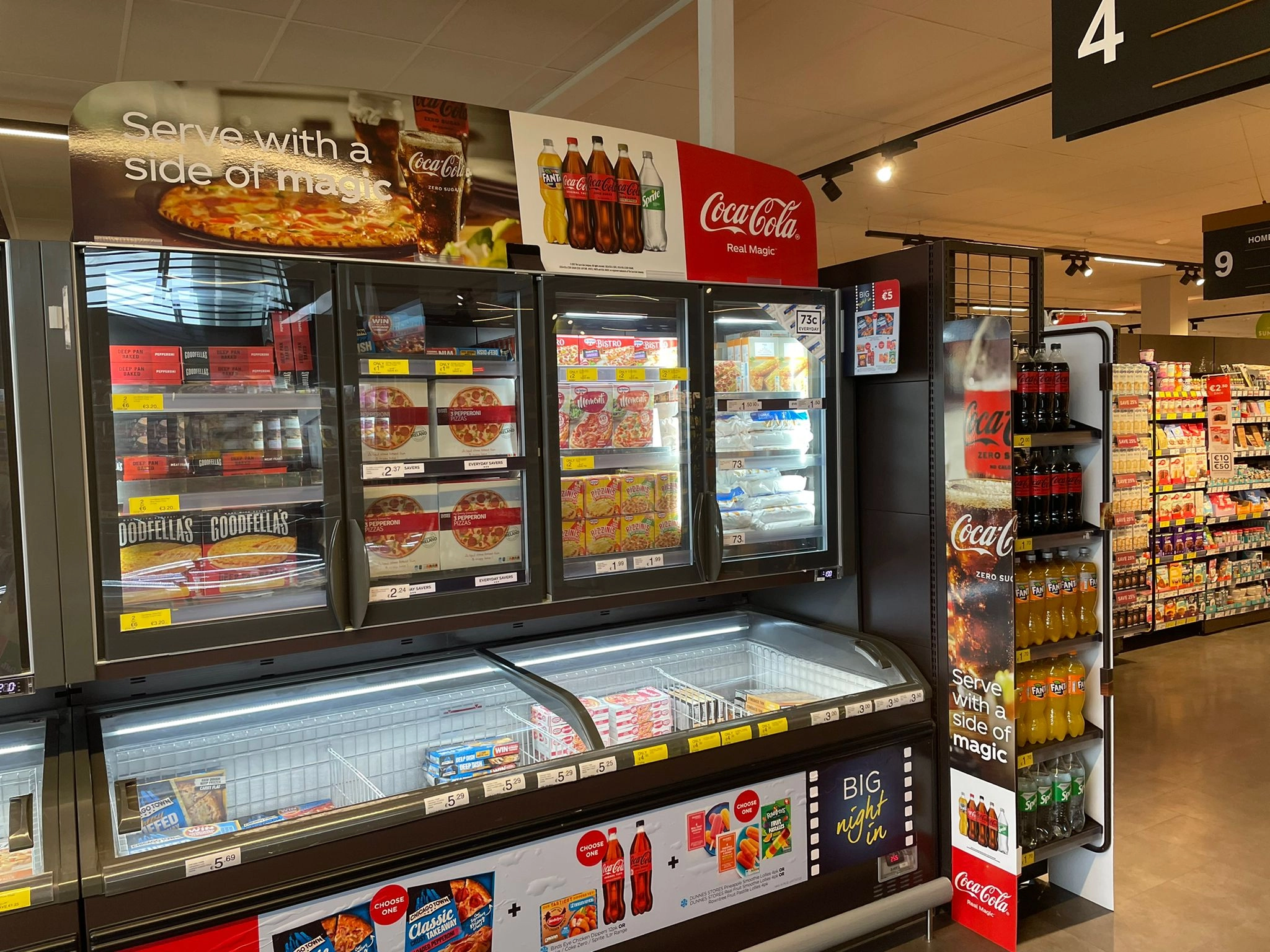
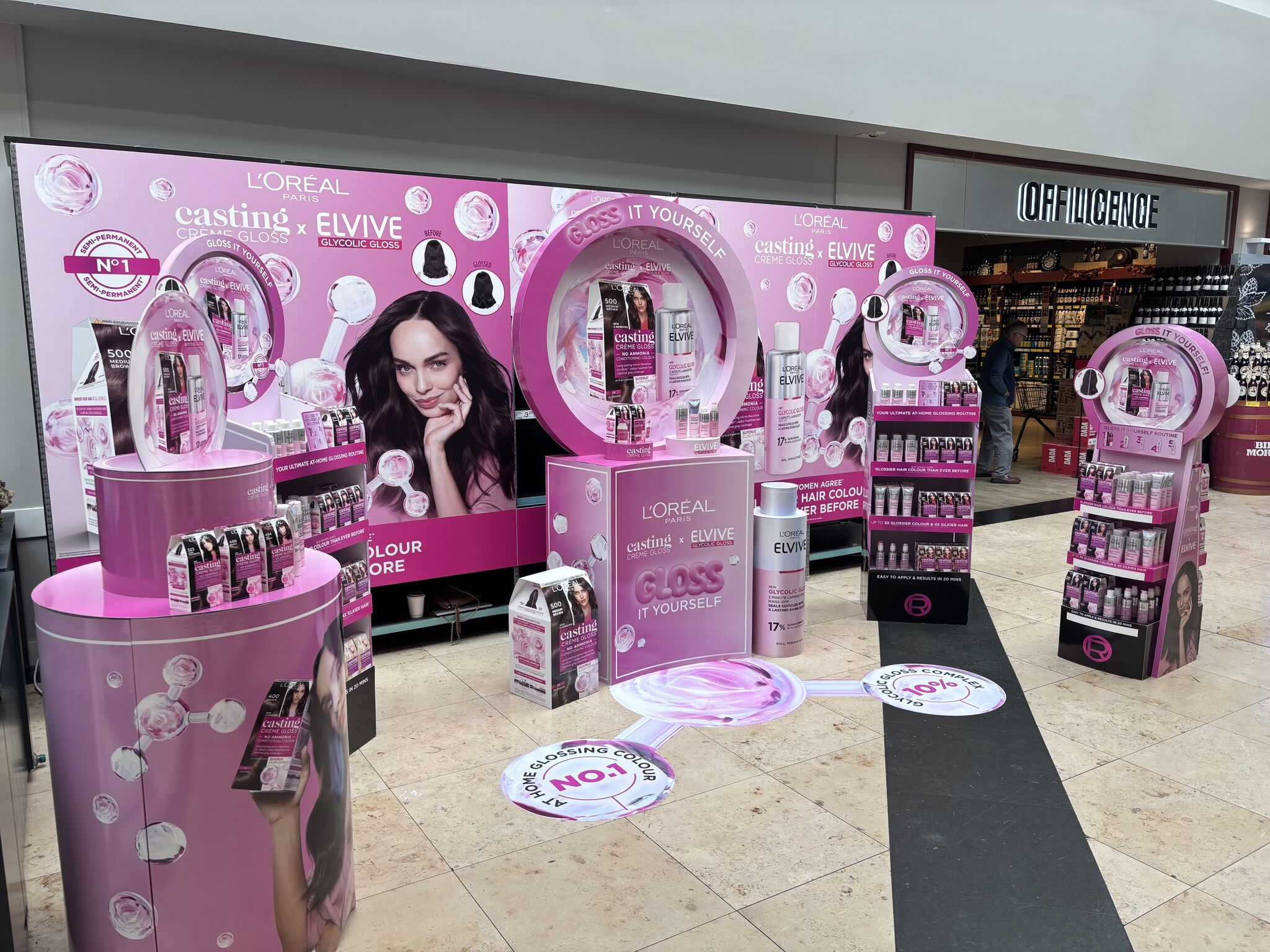
Let’s establish the basics. An FSDU display (Free Standing Display Unit) is a standalone point-of-sale solution designed to hold, protect, showcase, and ultimately sell products without requiring integration into existing retail fixtures. Think of those impressive FSDU displays you see in supermarket aisles, pharmacy entrances, or petrol station forecourts – the ones that catch your eye because they’re three-dimensional, branded, and impossible to miss.
According to the Point of Purchase Advertising International (POPAI), well-designed FSDUs can increase product sales by up to 200% compared to traditional shelf placement. That’s not marginal improvement, that’s transformational impact.
The anatomy of an effective FSDU
FSDUs come in various configurations, but share common elements:
Structural design: The physical engineering that ensures the unit stands securely, holds product safely, and can be assembled without requiring an engineering degree. This is where McGowans’ cardboard engineers excel – creating units that are simultaneously robust, elegant, and practical.
Graphics and branding: The visual elements that catch attention and communicate brand messaging. With modern digital printing technology, graphics can be photo-realistic, incorporate spot varnishes or special finishes, and create genuine stopping power in busy retail environments.
Product integration: How the unit holds and displays the actual product. Effective FSDUs make products easily accessible whilst preventing theft or damage, all whilst showcasing them attractively.
Footprint efficiency: The physical space the unit occupies versus the value it delivers. Retailers grant floor space grudgingly; FSDUs must justify every square centimetre.
Why brands are investing
in FSDU solutions
The business case for FSDUs extends beyond simple visibility. Let’s examine the strategic advantages:
Securing premium positioning without premium shelf fees Traditional shelf space allocation involves complex negotiations, listing fees, and ongoing competition for position. Retailers control the environment entirely. FSDUs flip this dynamic. You’re providing the entire display infrastructure, which often makes retailers more receptive. As retail merchandising expert Dr James Patterson notes: “Brands that provide complete display solutions remove friction from retailer decision-making, creating win-win scenarios where both parties benefit”.
Creating brand experiences at point of purchase A product on a shelf is just… a product on a shelf. An FSDU transforms that product into a brand experience. You control messaging, visual hierarchy, product storytelling, and even the physical interaction customers have with your brand. This three-dimensional brand presence significantly impacts purchase decisions.
According to research by the Retail Marketing Institute, 76% of purchasing decisions are made in-store, and visual merchandising directly influences 68% of those decisions. FSDUs put your brand literally in front of customers at the exact moment they’re deciding what to buy.
Flexibility for campaigns and promotions Seasonal campaigns, product launches, limited editions – these all benefit from dedicated display that appears, makes impact, and can be replaced when the campaign concludes. FSDUs enable this flexibility without requiring permanent shelf space reallocation. Launch your summer range with a beach-themed FSDU, replace it with autumn harvest aesthetics when seasons change, all without negotiating new shelf space each time.
Data capture and testing opportunities Different FSDU designs, positioning strategies, and messaging approaches can be tested across locations or regions. This real-world market testing provides invaluable data about what resonates with customers. Digital printing technology makes producing varied units economically viable, enabling genuine A/B testing in physical retail environments.
The McGowans advantage:
engineering meets creativity
Creating effective FSDUs requires balancing multiple considerations: structural integrity, visual impact, cost efficiency, assembly simplicity, and transport practicality. This is precisely where McGowans Print’s specialised capabilities deliver exceptional value.
Dedicated cardboard engineering team We employ four full-time cardboard engineers whose entire focus is creating bespoke FSDU, free standing display units solutions. These aren’t graphic designers dabbling in structure; they’re specialists in material behaviour, weight distribution, joint design, and the countless technical details that separate impressive displays from collapsed messes on shop floors.
This engineering expertise means your FSDU will: Stand securely without toppling when customers interact with products Support the weight of your product range safely Assemble logically without requiring detailed instructions or specialist tools Transport efficiently without damage Meet health and safety requirements for public spaces
Pitch preparation
Retailers evaluate FSDU proposals based on:
Revenue potential (how much incremental sales will this generate?) Space efficiency (does this deliver more value per square metre than alternatives?) Operational simplicity (is assembly straightforward? Does it require maintenance?) Brand alignment (does this fit our store environment and customer base?) Prepare proposals addressing these considerations explicitly. Provide sales projections supported by category data or trial results. Demonstrate space efficiency through floor plan visualisations. Show assembly simplicity through videos or samples.
Trial programs and evidence building
Retailers are more receptive when risk is minimized. Offer trial placements in limited locations with clear success metrics and exit strategies. Demonstrate effectiveness through data, then leverage proven results to secure broader deployment.
McGowans can produce small quantities for exactly this scenario – test without over-committing to inventory that might not deploy.
Revenue potential (how much incremental sales will this generate?) Space efficiency (does this deliver more value per square metre than alternatives?) Operational simplicity (is assembly straightforward? Does it require maintenance?) Brand alignment (does this fit our store environment and customer base?) Prepare proposals addressing these considerations explicitly. Provide sales projections supported by category data or trial results. Demonstrate space efficiency through floor plan visualisations. Show assembly simplicity through videos or samples.
Maintenance and merchandising support
Once placed, FSDUs require ongoing attention. Retailers appreciate brands that:
Provide clear restocking guidelines Supply replacement units for damaged displays Offer merchandising support and training Monitor performance and optimise placement
Common FSDU mistakes
and how to avoid them
Learn from others’ expensive errors:
Over-engineering complexity: Ambitious designs requiring complicated assembly or frequent maintenance won’t be installed correctly. Retail staff need simple, intuitive construction. As retail consultant Sarah Murphy observes: “The perfect FSDU is one a busy shop assistant can assemble correctly whilst simultaneously handling customer queries”.
Ignoring transport and storage realities: Displays that don’t nest efficiently or require excessive packaging waste money on freight and create storage headaches. Design for the entire logistics chain, not just retail presentation.
Insufficient structural testing: Theoretical load calculations are necessary but insufficient. Physical testing under realistic conditions reveals issues calculations miss: dynamic loading from customer interaction, environmental factors like humidity, unforeseen stress points.
Poor graphic hierarchy: Trying to communicate everything simultaneously communicates nothing effectively. Establish clear primary messages visible from distance, reserve secondary information for closer inspection.
Neglecting retail environment context: Displays designed in isolation often fail in context. Visit actual retail locations. Observe lighting conditions, traffic patterns, competitive displays, customer behaviour. Design for reality, not idealized conditions.
The Wrap Up
Free Standing Display Units have evolved from simple cardboard boxes to sophisticated marketing tools capable of transforming retail performance.
FSDUs secure premium positioning without fighting for shelf space, create immersive brand experiences at the point of purchase, offer flexibility for campaigns and seasonal promotions, and provide measurable sales lift averaging 50-200% over standard shelf placement.
McGowans Print’s specialised FSDU display capabilities combine four dedicated cardboard engineers, advanced flatbed printing technology handling substrates up to ten feet by five feet, inline finishing for premium effects, and cost-effective production from single units upward. Effective FSDU display design balances structural integrity, visual impact, assembly simplicity, and transport efficiency whilst complying with retail safety standards. Success requires understanding both the creative potential and practical constraints of physical retail environments.
At McGowans, we’ve made FSDU free standing display units a cornerstone of our business precisely because they represent the intersection of engineering precision, creative excellence, and commercial impact, delivering measurable results for Irish brands seeking retail visibility.
Ready to transform your retail presence
with bespoke FSDU solutions?
McGowans Print’s specialist team combines cardboard engineering expertise with advanced printing technology to create displays that capture attention and drive sales. From initial concept through to retail floor installation, we handle every aspect of FSDU development. Book a consultation to discuss your requirements, request samples of our FSDU free standing display units work, or arrange a facility tour to see our 100,000 sq ft operation where engineering meets creativity.
Get in touch, let’s create display solutions that make your products unmissable.
Advanced flatbed printing technology
Our investment in large format digital printing capability includes flatbed systems that print on substrates up to ten feet by five feet. This enables:
Single-piece construction: Larger panels mean fewer joints and seams, creating more robust structures and cleaner aesthetic finishes. Substrate versatility: Different cardboard weights and types suit different applications. Lightweight units for temporary campaigns, heavy-duty construction for permanent installations, or speciality materials for premium presentations. Inline finishing: Spot varnishes, texture effects, and special colours can be applied during printing rather than requiring separate processes, improving efficiency and reducing costs.
Cost-effective short runs
Here’s what sets modern FSDU production apart: economic viability at low volumes. Traditional manufacturing methods required hundreds or thousands of units to achieve acceptable costs. Digital printing technology changes this equation entirely.
McGowans can economically produce single units for testing or specific locations. Need ten units for a regional trial? Twenty-five for a product launch? One hundred personalised units for different retail locations? All achievable at realistic costs.
Designing FSDUs
that actually work
Brilliant aesthetics mean nothing if your FSDU, free standing display unit collapses under product weight or can’t fit through standard retail doorways. Effective FSDU design balances multiple requirements:
Structural considerations: Weight capacity: Calculate total product weight including maximum loading. Add safety margin of at least 50%. Your cardboard engineers (like McGowans’ team) calculate required material thickness and structural reinforcement points based on physics, not guesswork.
Stability and centre of gravity: Displays top-heavy with product become tipping hazards. Effective designs position heavier items lower, use wider bases, and sometimes incorporate weight distribution features invisible to customers.
Assembly and installation: Retail staff are busy. FSDUs requiring complicated assembly won’t be installed correctly (or at all). Best designs assemble in under five minutes with minimal or no tools, using intuitive construction that’s difficult to get wrong.
Practical logistics - Transport efficiency: FSDUs ship flat-packed. Designs must nest efficiently to minimise freight costs whilst protecting printed surfaces during transit. McGowans considers transport optimization during the design phase, not as an afterthought.
Doorway and aisle navigation: A stunning six-foot display is useless if it won’t fit through standard retail doorways (typically 32-36 inches) or manoeuvre down aisles. Designs must consider real-world installation logistics. Retail environment compatibility: Different retail environments impose different constraints. Supermarkets have different floor space economics than pharmacies. Petrol stations have different traffic patterns than department stores. Effective FSDU design reflects the specific retail context.
Regulatory compliance - Fire safety regulations: Cardboard displays in public spaces must meet fire safety standards. Material selection and treatment ensure compliance whilst maintaining functionality.
Health and safety: Sharp edges, unstable structures, or displays blocking emergency exits create liability issues. Professional FSDU designers incorporate safety considerations throughout.
Accessibility: Displays shouldn’t create barriers for customers with mobility challenges or visual impairments. Placement, height, and navigation around units require consideration.
FSDU types and applications
Different products and retail environments suit different FSDU configurations:
Counter displays Compact units designed for checkout counters or service desks. Ideal for impulse purchases like confectionery, phone accessories, or small gift items. Footprint typically under 400mm x 400mm to avoid encroaching on transaction space.
Floor-standing units The workhorses of FSDU, free standing display units deployment. Ranging from waist-height to over six feet tall, these standalone displays create significant presence in high-traffic areas. Suitable for everything from beverage multipacks to personal care products to seasonal campaigns.
Dump bins Simple but effective – open-top units that hold products in bulk, encouraging customers to “dig” for items. Particularly successful for promotional pricing or clearance items where the slight chaos suggests value and urgency.
Shelf-ready packaging (SRP) Hybrid solutions where the shipping case itself becomes the display. Products arrive at retail in display-ready packaging, eliminating unpacking and merchandising labour. Increasingly popular with major retailers who value operational efficiency.
Pallet displays Large-scale solutions for warehouse retailers or bulk displays. Products ship on standard pallets with custom-printed surrounds that transform functional logistics into branded merchandising.
The production process:
from concept to retail floor
Understanding how FSDUs move from idea to implementation helps brands plan effectively:
Design and prototyping phase Initial concepts typically begin with briefs covering product specifications, retail environment requirements, budget parameters, and timeline constraints. McGowans’ cardboard engineers translate these into structural designs whilst graphic designers develop visual concepts.
Physical prototypes are crucial. Three-dimensional mock-ups reveal issues invisible in flat designs: assembly complications, stability concerns, graphic element positioning, product fit problems. Prototypes also enable retailer approval before committing to production quantities.
Material selection and testing Different substrates suit different applications. Lightweight economy board for short-duration campaigns. Heavy-duty fluting for permanent installations. Moisture-resistant treatments for refrigerated environments. McGowans guides material selection based on specific requirements and budget.
Load testing ensures structural integrity under real-world conditions. Sample units undergo stress testing with maximum product loading plus additional weight margin. Better to discover weaknesses during testing than after retail deployment.
Production and finishing Digital printing enables full-colour graphics on large format substrates. McGowans’ flatbed systems print directly onto cardboard up to ten feet by five feet, eliminating the need to laminate separate printed sheets to structural board.
Die-cutting creates precise shapes and assembly features. Computer-controlled cutting ensures accuracy within fractions of millimetres – critical for components that must align perfectly during assembly.
Creasing prepares fold lines that allow flat-packed units to assemble into three-dimensional structures without cracking or weak points. Quality assurance and delivery Sample units from each production run undergo assembly testing, visual inspection, and load verification before quantities ship. This catches any production variations before delivery to retail locations.
Packing for transport balances protection with efficiency. Units must arrive undamaged whilst minimising freight costs through efficient nesting and appropriate packaging materials.
Cost considerations and ROI calculation FSDU investment requires justification, particularly for brands with limited marketing budgets. Let’s examine the economics:
Upfront costs FSDU, free standing display units expenses typically include: Design and engineering (prototyping, revisions, approvals) Material and production costs (varies significantly based on size, complexity, quantity) Finishing and special effects (spot varnish, special colours, texture) Delivery and installation support Retailer negotiation and placement fees (where applicable) McGowans provides transparent quoting covering all elements, avoiding surprise costs during projects. Small-batch capabilities mean brands can test concepts before committing to larger deployments.
Ongoing expenses Consider the total campaign lifecycle: Refreshing graphics for seasonal campaigns Replacement units for damaged displays Product restocking and maintenance Performance monitoring and optimisation
6 FAQs: Point-of-Sale Print
FSDU costs vary significantly based on size, complexity, quantity, and finishing requirements. Simple counter displays might start around €50-100 per unit in quantities of 100+, whilst large elaborate floor displays could range €200-500+ per unit depending on specifications. However, modern digital production means even small quantities (10-25 units) are economically viable for testing. McGowans provides transparent quoting covering design, production, and delivery so you understand total investment upfront. Remember to evaluate ROI rather than just unit cost – FSDUs generating 100-200% sales lift quickly justify their investment.
McGowans’ digital printing capabilities enable cost-effective production from single units upward. You can produce one prototype for testing, ten units for a trial program, or hundreds for full deployment. Whilst per-unit costs decrease with volume, our technology eliminates the traditional requirement for minimum orders of 500-1,000+ units. This flexibility enables genuine market testing and regional customisation that wasn’t economically feasible with older production methods.
Timeline depends on complexity, but typical projects follow this pattern: initial design and prototyping (1-2 weeks), revisions and retailer approval (1-2 weeks), production and finishing (1-2 weeks depending on quantity). Rush projects can compress timelines, whilst complex designs requiring extensive structural testing might extend them. Starting conversations early ensures FSDUs are ready when retail opportunities arise rather than scrambling when deadlines loom.
Absolutely. Digital production economics have democratized FSDU free standing display units access. Small brands can start with modest quantities (10-25 units) for targeted retail trials, then scale based on proven results. Simple but effective designs deliver impact without requiring expensive finishing techniques. McGowans works with brands of all sizes to create solutions aligned with budget realities whilst maintaining quality standards. Starting small with well-executed displays often proves more effective than over-extending on elaborate units you can’t deploy widely.
Successful retail placement focuses on mutual benefit rather than just brand needs. Demonstrate how your FSDU generates incremental revenue per square metre, requires minimal retailer effort (simple assembly, clear restocking), and aligns with their customer base and store environment. Offer trial placements with clear success metrics and exit strategies to minimize retailer risk. Provide compelling visuals showing the display in context, and if possible, reference successful placements in similar retail environments. Retailers respond to evidence-based proposals that make their decision easy.
Most FSDUs are designed for specific campaign durations (seasonal promotions, product launches, limited editions) then recycled when replaced. Cardboard-based displays are fully recyclable through standard waste streams. Some brands design modular systems where structural elements are reused with refreshed graphic panels for different campaigns, extending investment value. For permanent or long-duration placements, more robust construction and materials ensure extended lifespan. McGowans can advise on designing for your specific use case whether that’s short-term impact or long-term presence.
Have you seen an FSDU that stopped you in your tracks? Maybe made you buy something you hadn't planned to purchase? What made it so effective?